RV Safety for Families: The Rules That Matter Before Every Mile
Nobody hands you a safety manual when you drive off the lot. These are the checks that actually matter — the ones experienced families do every single trip, in the driveway, at every fuel stop, and the moment the rig is parked.
Affiliate disclosure: some links in this article are affiliate links. If you buy through them we may earn a small commission at no extra cost to you. Read the full disclosure.
Know your numbers before you tow
Every safe towing setup starts with three numbers: your tow vehicle's tow rating, its payload (on the door-jamb sticker), and the trailer's loaded weight — not the brochure dry weight. The loaded trailer must sit comfortably under the tow rating, and the tongue weight (10–15% of trailer weight) plus your family and gear must fit inside the payload.
When the numbers are close, the trailer drives the vehicle instead of the other way around. Twenty percent of headroom on both numbers is the family target — it is what turns emergency maneuvers from white-knuckle events into non-events.
The five-minute walk-around that prevents disasters
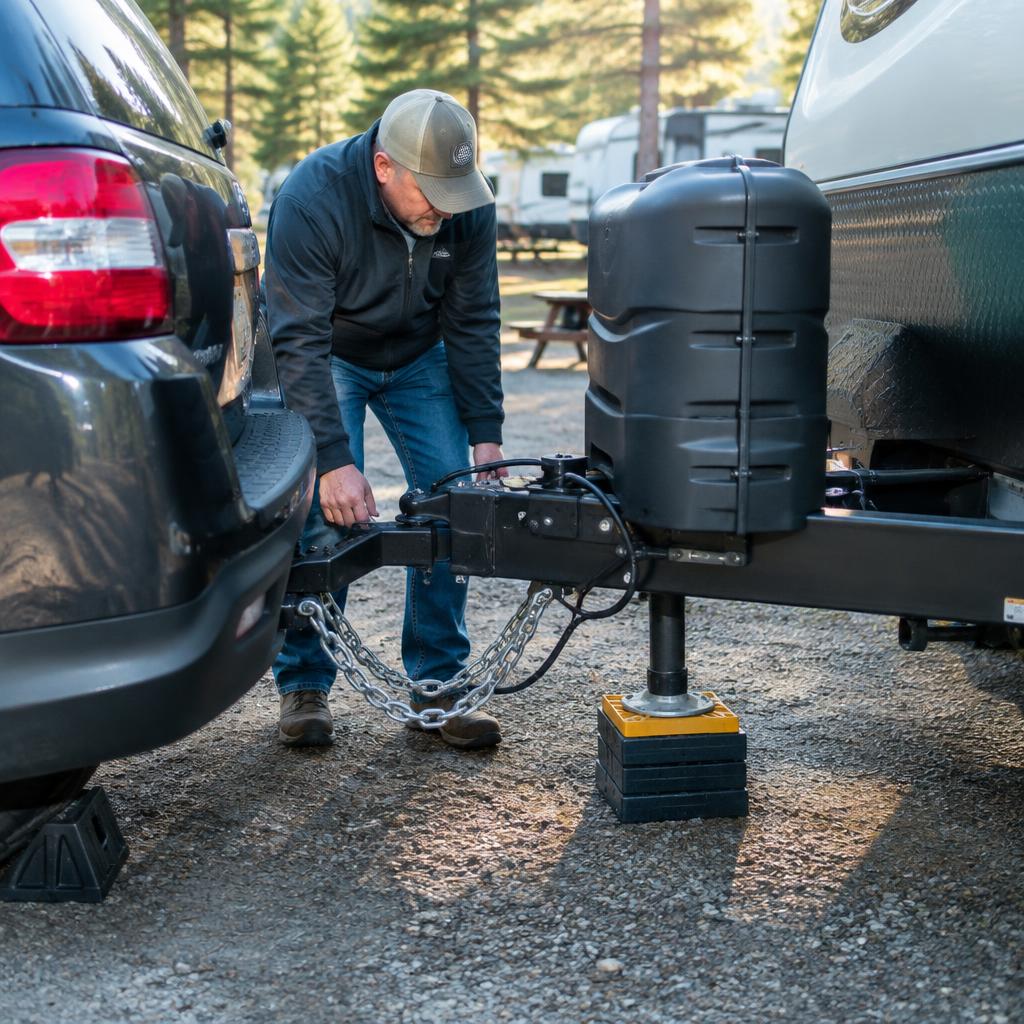
Before every departure, including leaving a rest stop, walk the whole rig. Hitch latched and pinned, safety chains crossed under the coupler in an X, breakaway cable attached to the vehicle (not the chains), and the seven-pin plug seated so brake lights and turn signals work. Then test the lights with a partner before rolling.
Check tire pressure on the trailer and the tow vehicle cold, every travel morning. Trailer tires are the single most common roadside failure, and they fail from underinflation and age, not from looking worn. Feel each hub at fuel stops. A hub noticeably hotter than the others is a bearing asking for attention.
Finish the walk-around looking up and around: antenna down, vents closed, steps in, awning locked, stabilizers up, and nothing left on the picnic table or the bumper. Most RV damage is self-inflicted, and most of it happens in the first hundred feet of a travel day.
In a hurry? Jump straight to the gear we recommend for this.
Carbon monoxide, propane and smoke: the invisible risks
Every RV needs working smoke, carbon monoxide and propane detectors. Test them monthly and replace units older than five to seven years. CO is odorless and kids are more vulnerable to it; a detector is the only warning you will ever get.
Never run a generator while sleeping with windows closed, keep generator exhaust pointed away from the rig, and never grill propane or charcoal inside or under an awning. If the propane alarm sounds or you smell rotten eggs: everyone out, no switches, no flames, shut the tank valve from outside if it is safe, and ventilate before re-entering.
Keep two fire extinguishers — one by the door, one in the bedroom area, and make sure every adult and older kid knows where they are and how to pull the pin. Practice a family exit drill: RV doors and emergency exit windows work differently than house doors, and the time to learn the window exits is not during an emergency.
Driving rules with kids on board
Everyone rides in a proper seat with a proper belt — nobody walks around a moving rig, ever. Car seats and boosters install in the tow vehicle or in designated belted motorhome seats, exactly as they do in a car. The sofa is not a seat.
Slow down. Sixty to sixty-five miles per hour is the family RV sweet spot: better control in wind and truck wakes, dramatically better braking distance, and noticeably better fuel economy. Increase following distance to at least four seconds, and take turns wider and slower than feels necessary.
Plan fuel stops and rest breaks every two to three hours. Driver fatigue is a bigger risk than any mechanical issue, and kids who move around at every stop ride noticeably happier between stops.
Campsite safety with kids
The moment you park, set the boundaries before anyone unbuckles: where kids can roam, which roads are off-limits, and where the family meeting spot is. A walkie-talkie or a brightly colored flag on your site marker helps younger kids identify home in a row of similar rigs.
Do a hazard sweep of the site before kids explore: broken glass, exposed nails in fire rings, poison ivy at the treeline, ant hills, and the hookup pedestal (which toddlers find fascinating). Establish the fire rule early and repeat it every trip: no running within ten feet of the fire ring, and no fire without an adult and a water bucket.
At night, keep a light on the rig and a flashlight in every kid's pocket for bathhouse walks. Campgrounds are remarkably safe places, and clear, simple rules are what keep them that way.
Recommended gear for this trip
Everything below is hand-picked for family trips. Affiliate links support the site.
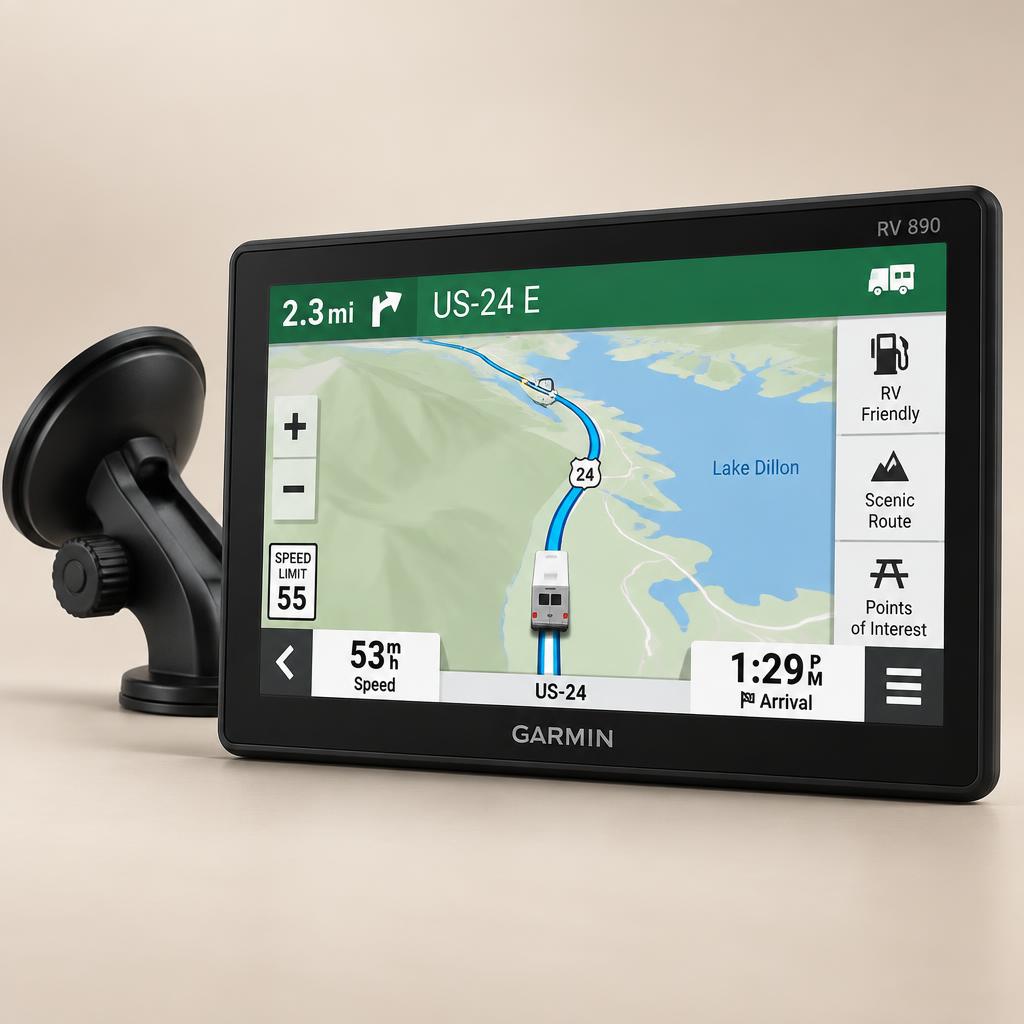 Best for towing safety
Garmin RV 890 GPS Navigator
Routes around low bridges, steep grades and weight-restricted roads using your rig's real height and length.
Key benefits
- Custom RV routing by size and weight
- 8-inch high-resolution touchscreen
- Preloaded street maps with free updates
Pros
- Warns early on grades
- Clear lane guidance
Cons
- Map updates can be slow over Wi-Fi
Affiliate link — we may earn a commission at no cost to you.
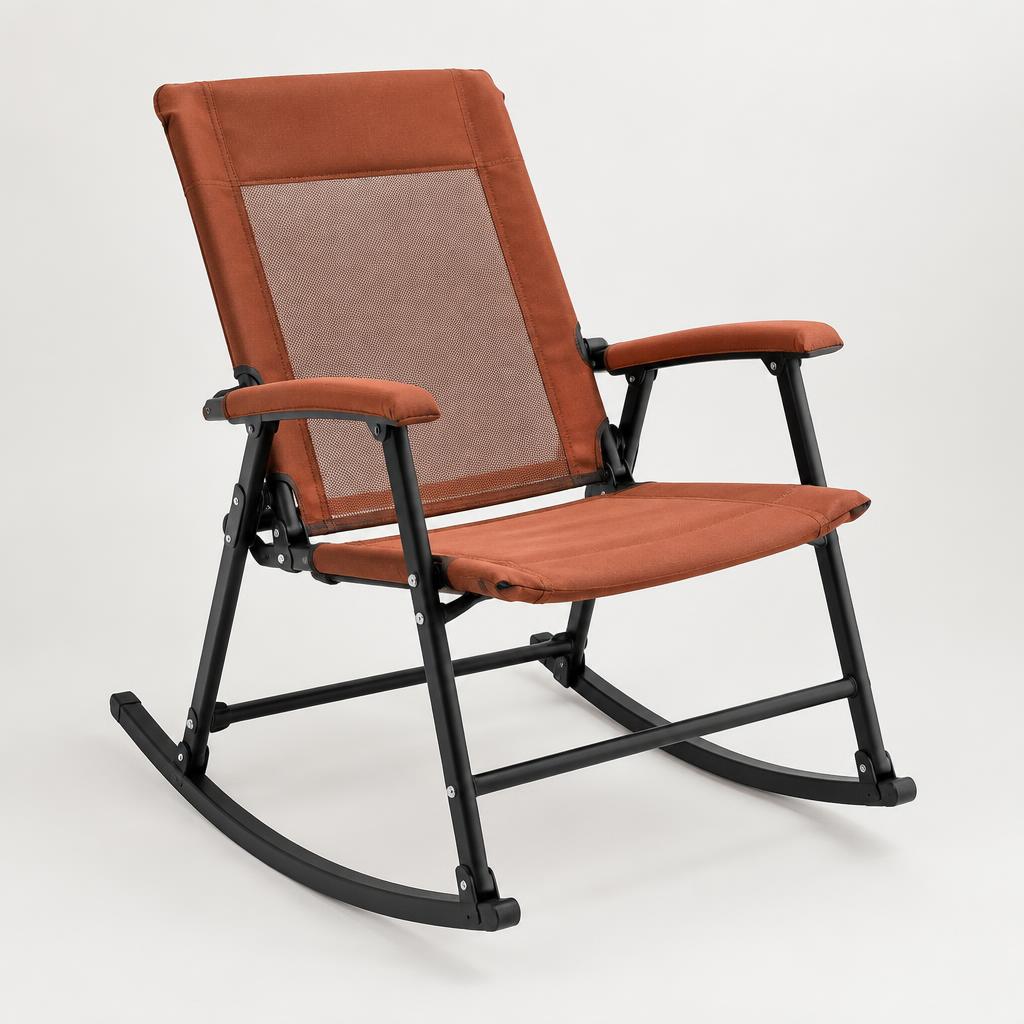 Best for campfire nights
GCI Outdoor Freestyle Rocker
A rocking camp chair that works on grass or gravel, folds flat for storage, and is sturdy enough that parents and kids both end up fighting over it.
Key benefits
- Spring-action rocking on any surface
- Holds up to 250 lbs
- Folds flat for easy packing
Pros
- Rocking works even on uneven ground
- Padded armrests with a drink holder
- Sets up in seconds
Cons
- Heavier than a basic folding chair at about 12 lbs
Affiliate link — we may earn a commission at no cost to you.
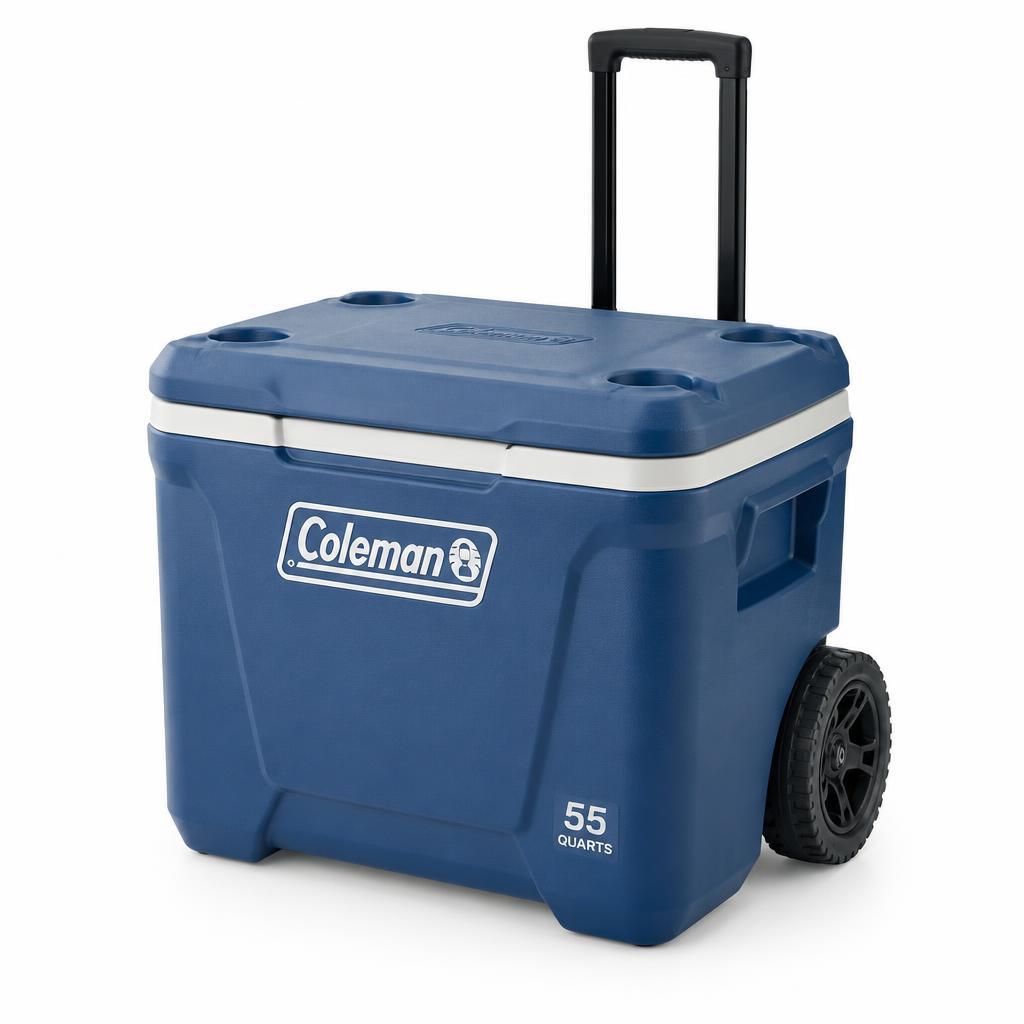 Best for long trips
Coleman 55-Quart Wheeled Cooler
A 55-quart wheeled hard cooler with multi-day ice retention, so you stop restocking the campground store every morning.
Key benefits
- Up to 5 days of ice retention
- Wheels and handle for campsite hauling
- Lid doubles as an extra seat
Pros
- Great value for the size
- Drain plug for easy cleaning
Cons
- Takes up real cargo space
- Holds fewer days than premium rotomolded brands
Affiliate link — we may earn a commission at no cost to you.
Frequently asked questions
Is it safe for kids to ride in a travel trailer while driving?
No — and it is illegal in most states. Kids ride in the tow vehicle in proper car seats or boosters, exactly as they would on any car trip. In a motorhome, they ride in designated belted seating positions. Nobody should ever be walking around or sleeping unrestrained in a moving rig.
How often should I check my trailer hitch during a trip?
Do the full walk-around before every departure, including after rest stops — hitches can be tampered with or components can loosen. At every fuel stop, glance at the coupler, chains and plug, and feel the trailer hubs for unusual heat.
Do RVs need a carbon monoxide detector?
Absolutely. Every RV should have working smoke, carbon monoxide and propane detectors, tested monthly and replaced per manufacturer schedule (typically every five to seven years). CO is odorless, and RVs concentrate combustion appliances in a small, sealed space.
What should be in an RV fire safety kit?
Two rated fire extinguishers (one near the door, one in the sleeping area), a fire blanket near the stove, working smoke/CO/propane detectors, and a practiced exit plan that includes the emergency exit windows. Everyone old enough should know how to pull the extinguisher pin.
Share
Facebook X PinterestGet the free RV planning bundle
Five printable checklists you can download and print right now — no email required.
Free to download, print and share. No spam — just the checklist.
Related reading
Lightweight Travel Trailers for Families: What to Know Before You Buy
You do not need a heavy-duty truck to RV with kids. Lightweight trailers under 3,500 pounds open the whole lifestyle to families with a midsize SUV — if you understand what the weight labels actually mean.
14 min read
Camping with Toddlers: The Survival Guide for RV Families
Camping with a toddler is not a smaller version of camping with kids — it is a different sport. The good news: an RV solves most of it. Here is how to handle sleep, meals, safety and sanity when your travel buddy is three feet tall and deeply committed to chaos.
12 min read
The Complete Beginner's Guide to Family RVing
What to know before a first family RV trip: rig choice, campground booking, packing and the routines that keep kids happy on travel days.
14 min read