RV Solar and Lithium Setups for Families: A No-Jargon Guide
Solar and lithium batteries changed how our family camps — quiet mornings, cold food and charged devices with no generator. Here is exactly how to size, buy and install a family-friendly system without an engineering degree.
Affiliate disclosure: some links in this article are affiliate links. If you buy through them we may earn a small commission at no extra cost to you. Read the full disclosure.
Why families bother with solar at all
Hookups are not always where the good campsites are. Many national park campgrounds, forest service loops and the best free public-land sites have no electric pedestal at all. Without solar, you are running a generator through quiet hours or rationing battery like it is 1987.
A modest solar and lithium setup replaces the generator for almost everything except air conditioning. The fridge stays cold, the fans run all night, the kids' tablets charge, and the coffee grinder works at 6am without waking the campground. That last part matters more than any spec sheet.
The other quiet win is battery health. Lead-acid batteries die young when they sit half-charged, which is exactly what happens on a cloudy weekend. Lithium batteries tolerate partial charging indefinitely, which matches how families actually camp.
How much power does a family actually use?
Before buying anything, count a real day. A typical family trailer running a 12V fridge, vent fans, lights, water pump, device charging and a couple of hours of TV lands between 80 and 150 amp-hours per day at 12 volts. Add a laptop for remote school or work and you drift toward the top of that range.
Air conditioning changes the math entirely — a rooftop unit pulls 1,200 to 1,500 watts running, and no realistic family battery bank will run it through a summer night. Plan solar for everything except the AC, and keep shore power or a generator as the AC plan.
The honest rule we use: size the battery for one full day plus one cloudy morning, and size the solar to refill that battery by mid-afternoon on a normal sunny day.
In a hurry? Jump straight to the gear we recommend for this.
The parts, explained without jargon
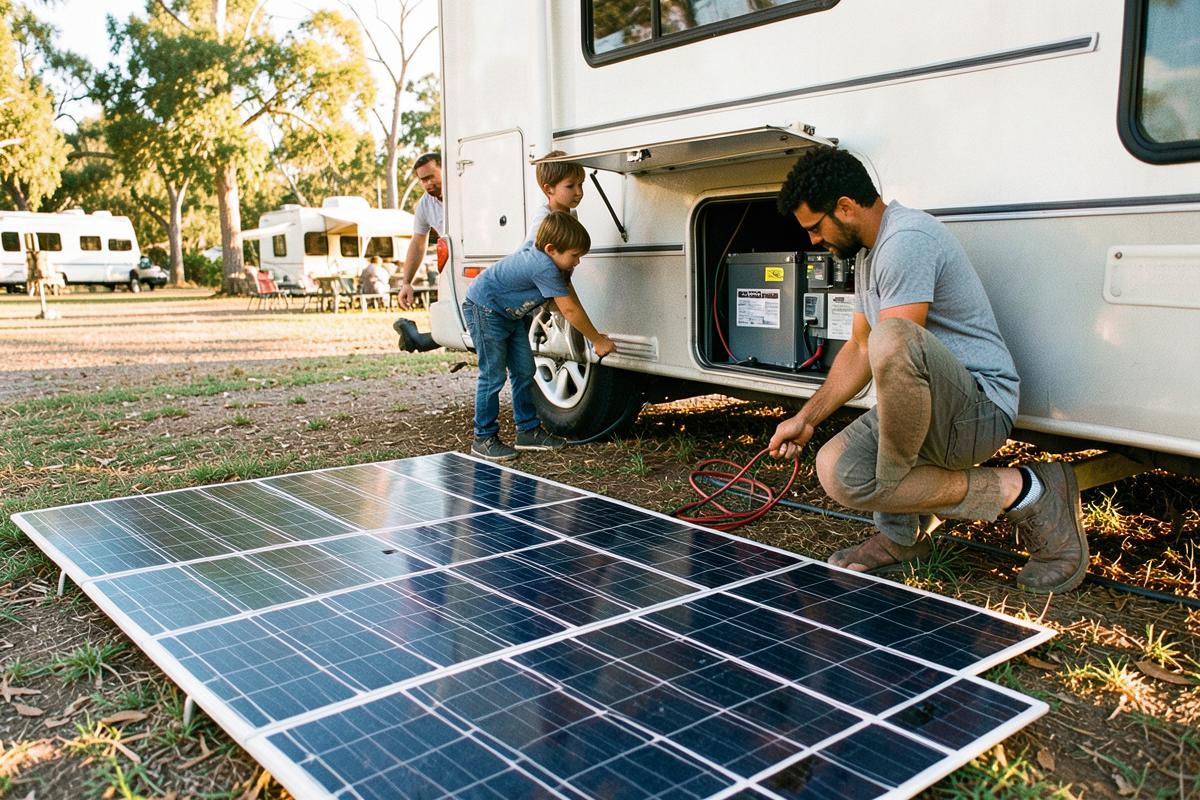
Solar panels make the power. Rigid roof panels are set-and-forget; portable folding panels let you park in the shade and put the panels in the sun, which is the setup most families end up preferring. A mix of both works well.
The charge controller sits between the panels and the battery and keeps charging safe. Buy an MPPT controller, not PWM — it harvests meaningfully more power from the same panels, especially in the cool morning hours.
The lithium battery (LiFePO4) stores everything. Unlike the lead-acid battery your rig shipped with, lithium gives you nearly all of its rated capacity, charges two to four times faster, and lasts a decade or more. A 100Ah lithium battery delivers roughly the usable energy of a 200Ah lead-acid bank at half the weight.
The inverter turns battery power into household outlets for laptops, the TV and the coffee maker. A 1,000–2,000 watt pure sine wave inverter covers family needs; pure sine matters because laptops and CPAP machines dislike cheap modified sine units.
Three setups that work, at three budgets
Starter (around $600–$900): one 100Ah lithium battery, a 200-watt portable panel and a small MPPT controller. This covers lights, fans, water pump and device charging indefinitely, and keeps the fridge running in moderate weather. No roof work, no permanent wiring.
Sweet spot (around $1,800–$2,800): 200Ah of lithium, 400 watts of roof solar, a quality MPPT controller and a 1,000-watt inverter. This runs a family of four off-grid for a week with normal use and zero generator time. This is what we run.
Serious boondocking (around $4,000–$6,000): 400Ah of lithium, 600–800 watts of solar and a 2,000-watt inverter. Add a DC-to-DC charger so the alternator charges the bank on drive days, and you can stay out indefinitely. Still no overnight AC, but everything else is unlimited.
Installation: what a careful DIYer can do
Portable-panel systems need no installation at all — the panel plugs into the controller, the controller clamps to the battery. This is where every family should start, because it teaches you your real usage before you drill a single hole.
Roof-mounted systems are a reasonable weekend DIY project if you are comfortable with basic wiring and sealant. The critical steps: fuse every positive connection within a foot of the battery, use wire sized for the current, and seal roof penetrations with proper self-leveling lap sealant, not hardware-store silicone.
Anything involving the inverter wiring into the rig's breaker panel, or a DC-to-DC charger tied into the tow vehicle, is worth paying a qualified RV tech to finish. A bad connection at 30 amps is a fire risk, and a pro install on that portion runs a few hundred dollars.
Daily life with solar: what actually changes
Mornings get quiet. The battery state-of-charge readout becomes a family scoreboard — the kids learn quickly that the number climbs in sun and drops when the screen time stacks up. It is the most practical energy lesson they will ever get.
Site choice gets better. You stop paying the hookup premium, you can take the shaded site in summer because the portable panel can sit in the sun twenty feet away, and the free public-land sites with the best views become your regular stops.
The one discipline solar requires is parking awareness. A rig parked under dense tree cover might harvest 20% of its rated solar. When we book a boondocking site, we now look at the sun path the same way we used to look at the playground.
Recommended gear for this trip
Everything below is hand-picked for family trips. Affiliate links support the site.
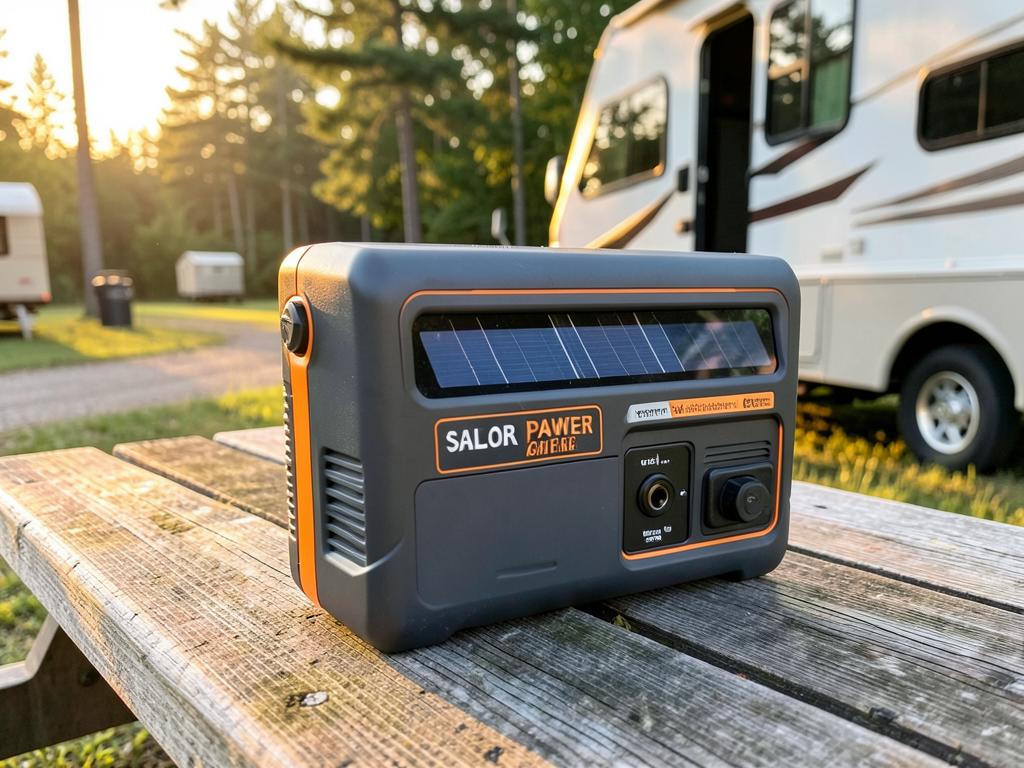 Best for boondocking
Jackery Explorer 1000 v2
A 1,070Wh power station that keeps a 12V fridge, CPAP and kids' tablets running through a long weekend off-grid.
Key benefits
- 1,070Wh LiFePO4 battery rated for 4,000 charge cycles
- 1,500W output (3,000W surge) across three AC outlets
- Recharges from 400W of panels in under 4 hours
Pros
- Silent operation
- Only 23.8 lbs — lightest in its class
- Dual 100W USB-C for laptops
Cons
- Panels sold separately
- Full wall charge takes about 1.7 hours
Affiliate link — we may earn a commission at no cost to you.
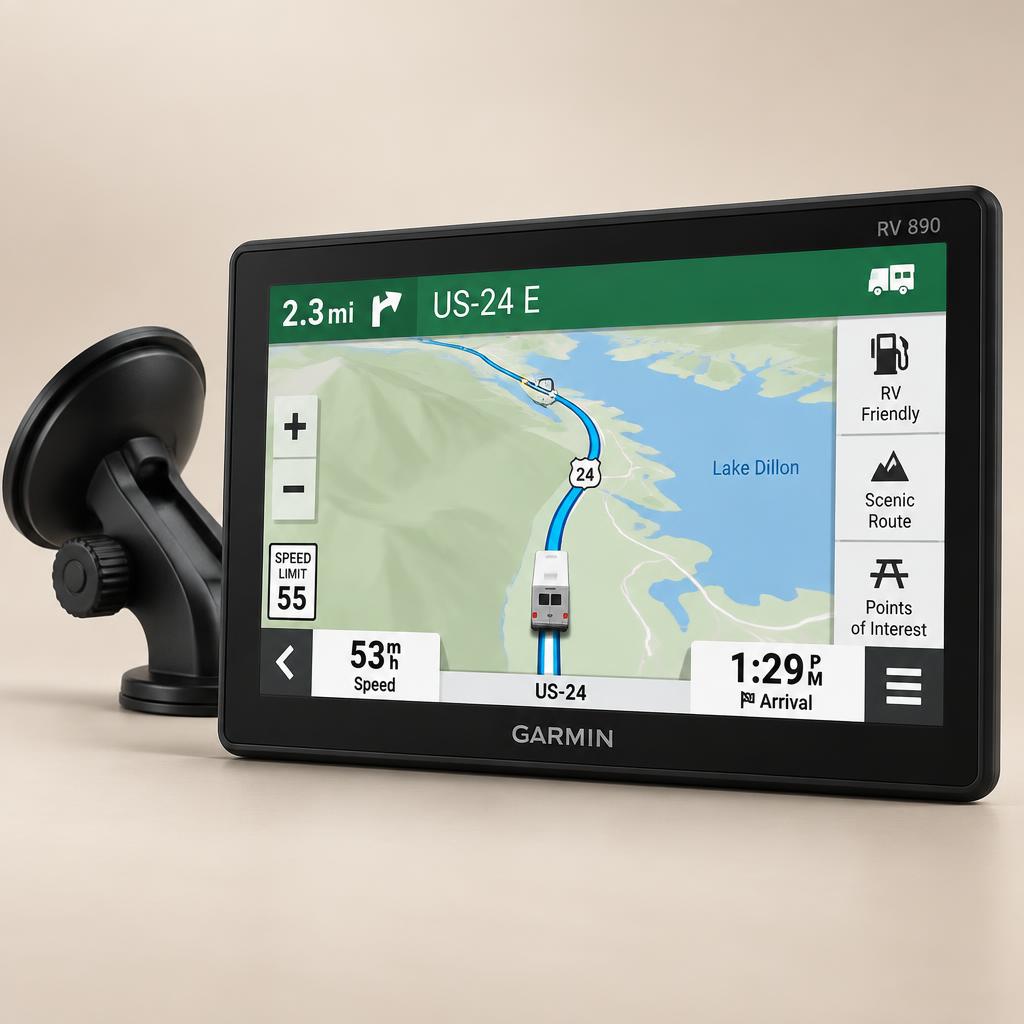 Best for towing safety
Garmin RV 890 GPS Navigator
Routes around low bridges, steep grades and weight-restricted roads using your rig's real height and length.
Key benefits
- Custom RV routing by size and weight
- 8-inch high-resolution touchscreen
- Preloaded street maps with free updates
Pros
- Warns early on grades
- Clear lane guidance
Cons
- Map updates can be slow over Wi-Fi
Affiliate link — we may earn a commission at no cost to you.
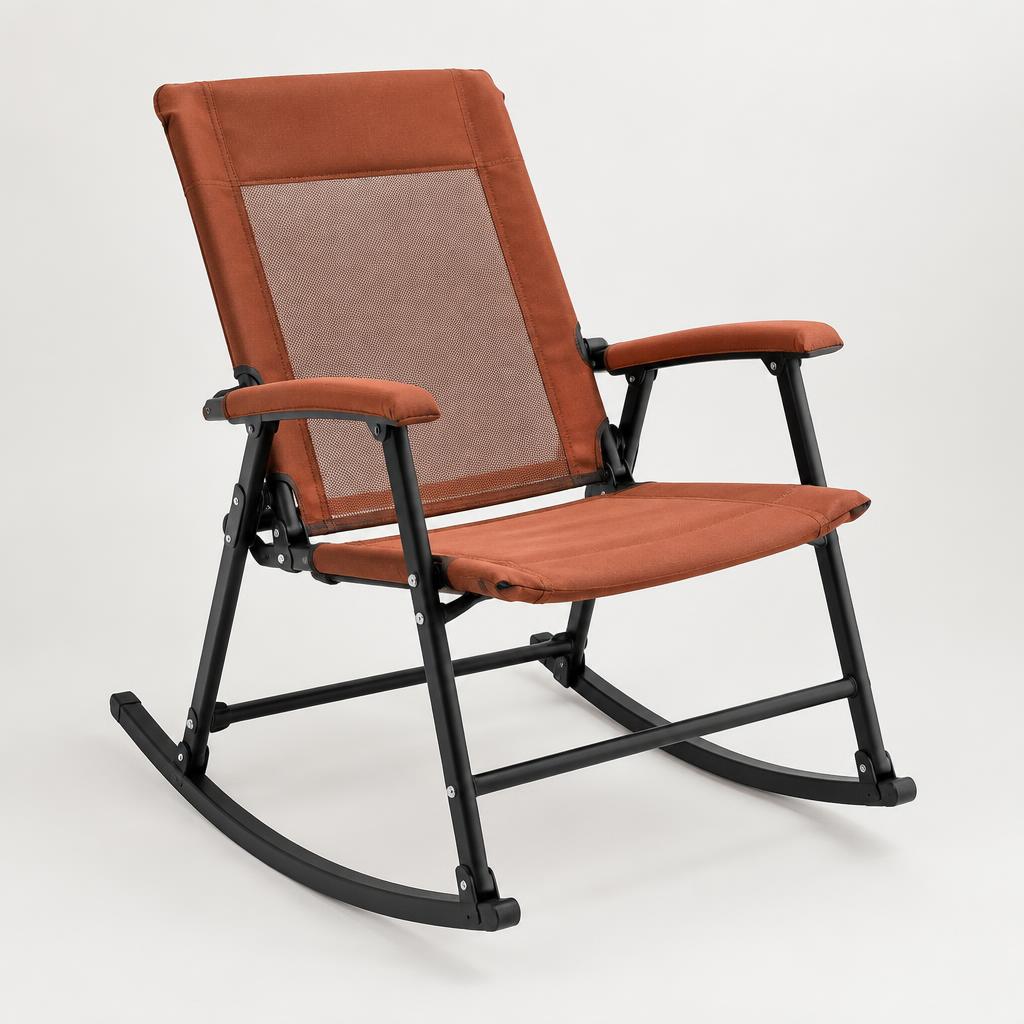 Best for campfire nights
GCI Outdoor Freestyle Rocker
A rocking camp chair that works on grass or gravel, folds flat for storage, and is sturdy enough that parents and kids both end up fighting over it.
Key benefits
- Spring-action rocking on any surface
- Holds up to 250 lbs
- Folds flat for easy packing
Pros
- Rocking works even on uneven ground
- Padded armrests with a drink holder
- Sets up in seconds
Cons
- Heavier than a basic folding chair at about 12 lbs
Affiliate link — we may earn a commission at no cost to you.
Frequently asked questions
Is lithium worth it over lead-acid for a family RV?
For most families, yes. LiFePO4 batteries deliver nearly double the usable capacity per pound, charge much faster, handle partial charging without damage and last 10+ years versus 2–4 for lead-acid. The upfront cost is roughly three times higher, but cost per year of service is lower.
How many watts of solar does a family RV need?
A good starting point is 200 watts per 100 amp-hours of lithium battery. Most families land at 400 watts of solar with a 200Ah bank, which refills a typical day's use by mid-afternoon in decent sun.
Can solar run an RV air conditioner?
Not practically for a family setup. A rooftop AC draws 1,200–1,500 watts running and far more at startup, so running it off batteries requires a very large (and expensive) bank. Plan solar for everything else and use hookups or a generator for AC.
Do I need a professional to install RV solar?
A portable panel setup requires no installation at all. Roof panels and a battery swap are manageable DIY for careful beginners with proper fusing and sealant. Inverter-to-panel wiring and DC-to-DC chargers are worth having a qualified RV technician finish.
Share
Facebook X PinterestGet the free RV planning bundle
Five printable checklists you can download and print right now — no email required.
Free to download, print and share. No spam — just the checklist.
Related reading
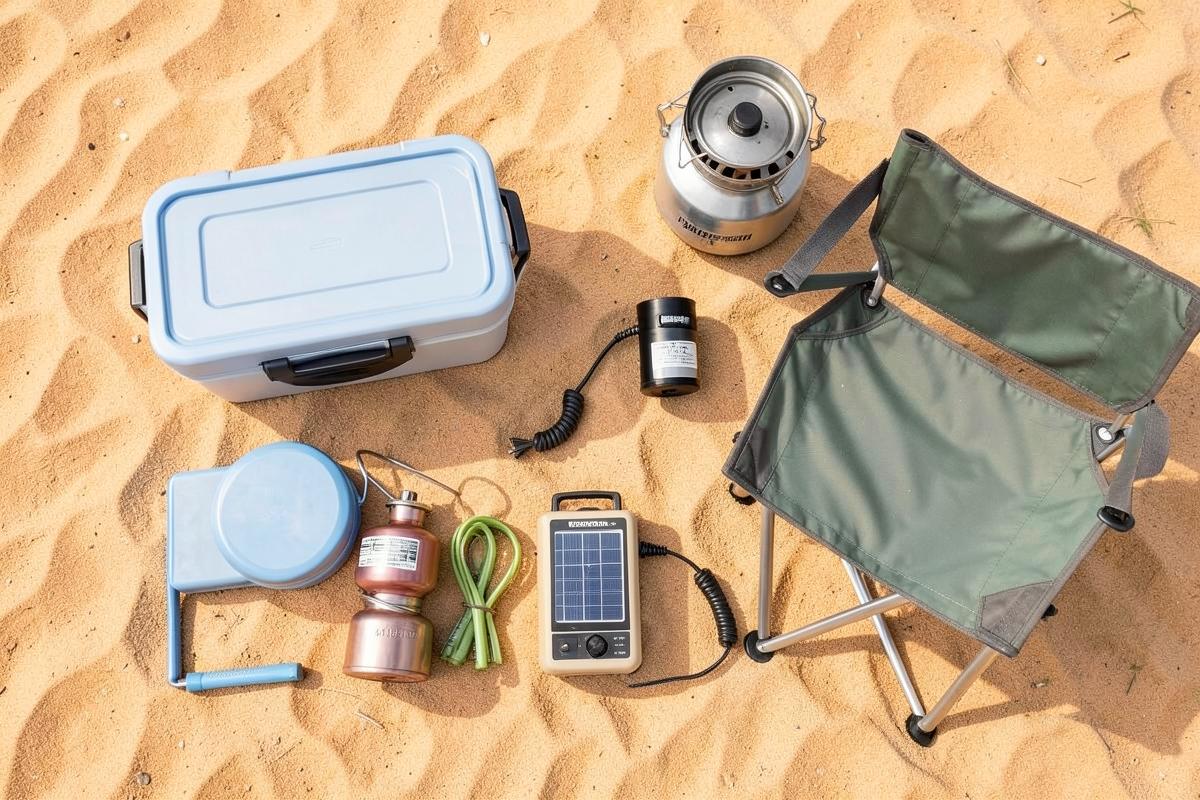
Essential RV Accessories Every Family Needs
The short list of RV accessories that earn their storage space, plus the popular ones most families end up leaving at home.
12 min read
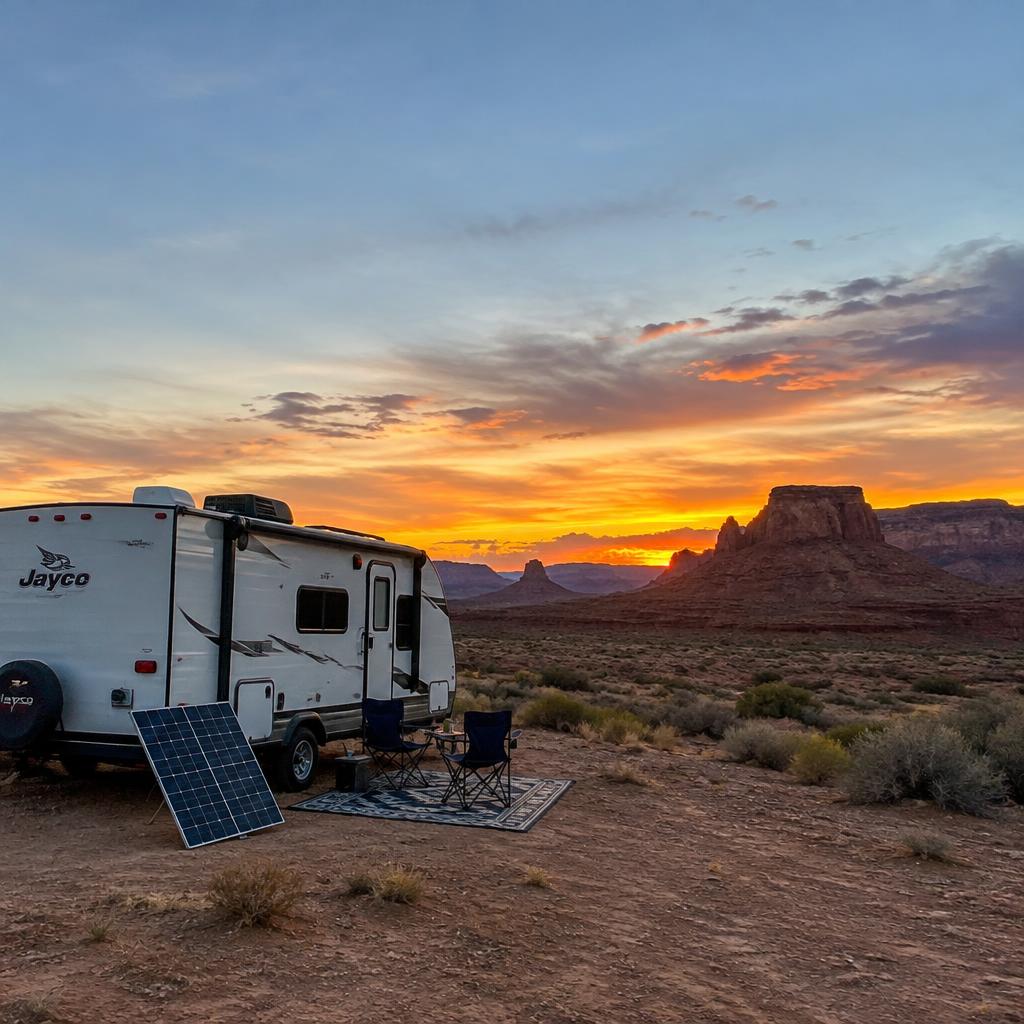
How to Find Free and Cheap Campsites (Without Sacrificing Safety or Sleep)
Campground fees are the biggest line item in most family RV budgets — and the easiest to shrink. Free camping is real, legal and often more beautiful than the $70 resort sites, once you know where to look and how to do it safely with kids.
13 min read

The Complete Beginner's Guide to Family RVing
What to know before a first family RV trip: rig choice, campground booking, packing and the routines that keep kids happy on travel days.
14 min read